Tustin highlight
Former Marine Corps Air Station Tustin
A blimp patrol facility built in 1942 and home to Marine Corps helicopter operations, closed in 1999 and now being redeveloped as Tustin Legacy.
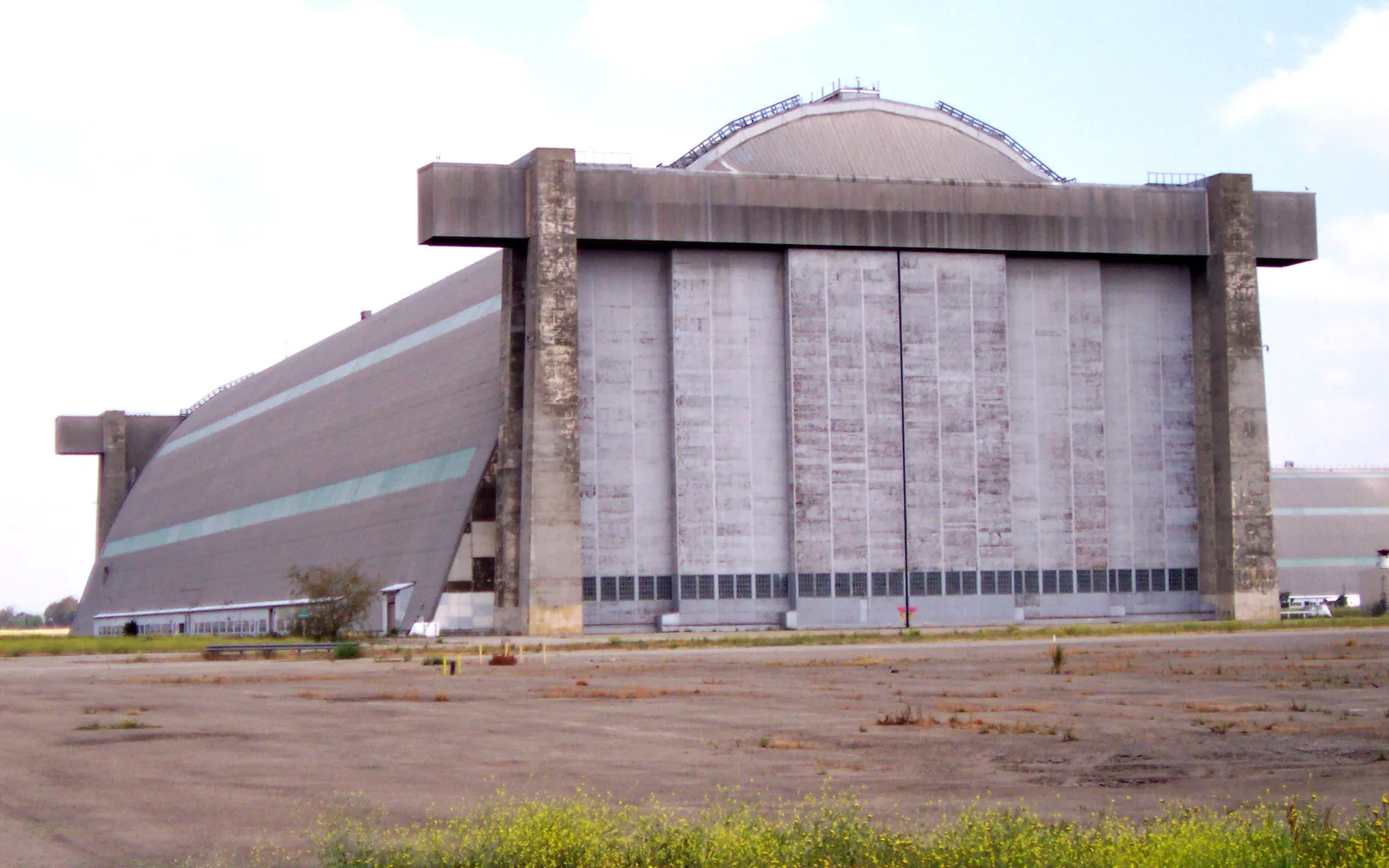
The Marine Corps Air Station Tustin was commissioned in 1942 in response to the threat of coastal attack following Pearl Harbor. It was built as a Lighter-Than-Air facility—a base for manned blimp patrols along the California coast. Two enormous hangars constructed that same year from Oregon Douglas fir became among the largest free-standing wooden structures in the world, a testament to wartime engineering. By 1951, during the Korean War, the base was reactivated and transformed into the nation's first military airfield dedicated solely to helicopter operations, serving in that role for nearly five decades.
At its peak during the Vietnam War and subsequent conflicts, MCAS Tustin housed approximately 4,500 military residents on base and employed nearly 5,000 military and civilian personnel. The base played a significant role in Operation Desert Shield and Desert Storm. The two historic hangars were recognized in 1975 as part of the National Register of Historic Places and later designated a National Historic Civil Engineering Landmark. On July 3, 1999, after 57 years of operations, the base officially closed as part of military base realignment. The 1,294-acre site has since been redeveloped as Tustin Legacy, a mixed-use community with residential neighborhoods, commercial space, educational facilities, and recreational areas.
Tustin's transformation from a military hub to a civilian suburb mirrors the economic transitions that many families navigate. Whether a household's primary earner is active military, a veteran, or someone whose job has shifted with community change, the years of peak earning and peak responsibility remain constant. Planning for those years with adequate coverage is what separates families who weather change from those who face hardship when income is lost unexpectedly.